Newsletter Subscribe
Enter your email address below and subscribe to our newsletter
Enter your email address below and subscribe to our newsletter

 Byadmin
Winter is the easiest season to get a compact sauna installed and actually used: contractor and delivery schedules are lighter, the cold-to-hot temperature swing is the exact contrast that makes a session feel worthwhile, and cabins built for four-season use handle freezing conditions without special modification. The main planning task is ordering early enough that any electrical work is scheduled before the first hard freeze, since a rushed winter install in deep snow is harder than one done in October.
Whatever corner of the garage, yard, or basement is being considered, walk it and measure it before the ground freezes or the space fills with holiday storage. A pad for an outdoor barrel or cabin sauna needs to be level and well-drained, which is far easier to grade in October than once the soil is frozen solid. For an indoor spot, check that the ceiling height clears 6.5 to 7 feet and that the door swing has room, the same clearance rules that apply any time of year, but worth re-confirming since garages tend to accumulate clutter heading into winter.
A plug-in infrared cabin on a 120V outlet needs no electrical work at all, which makes it the fastest option to have running before the cold sets in. A traditional heater in the 6 to 9 kilowatt range needs a dedicated 240V circuit, and electricians tend to book up as homeowners tackle holiday projects, so getting on a schedule in early autumn avoids a January where the unit sits assembled but unpowered. Confirm with the installer whether the panel has open capacity before ordering, since a full panel adds a subpanel to the job and extends the timeline further.
Most kit saunas ship with the panels or staves pre-cut and numbered, and a two-person unit typically goes together in an afternoon with two people and a basic tool kit. Running a full test heat-up before regular use, ideally on a mild day, lets an owner catch a loose panel seam or a heater fault while it is still easy to get a technician out. Waiting until the coldest week of the year to test a new unit for the first time is the most common reason small issues turn into a sauna that sits unused all winter.
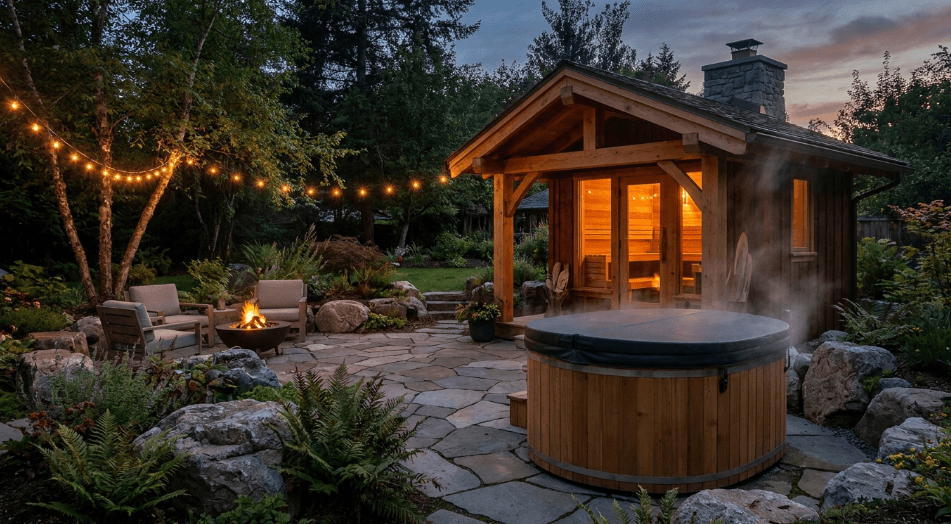
An outdoor unit needs its approach path shoveled and, ideally, treated with a pet-safe ice melt after every snowfall, since a slick path to a hot cabin is the single biggest winter safety issue with a home sauna. A boot tray or small mat just outside the door keeps snowmelt from turning the interior floor slippery. None of this is complicated, but it is worth setting up as a habit from the first snowfall rather than improvising it mid-January.
The appeal of stepping from freezing outdoor air into a 170 to 190 degree cabin is a large part of why winter owners tend to use a new sauna more consistently than owners who install one in July, when the temperature contrast is far smaller. Many first-time buyers who want that experience but are not ready for the electrical work of a full traditional heater start with a plug-in infrared cabin and upgrade later, and the team at SweatDecks can walk through current models sized for a specific garage or yard footprint before a purchase is finalized.
Once a compact sauna is installed and the first few sessions have gone smoothly, winter maintenance is mostly about keeping moisture and cold from working against the cabin. Wiping down the bench and floor after every session and leaving the door propped open for ten to fifteen minutes afterward lets residual steam escape rather than settling into the wood, which matters more in winter because cold air outside the cabin holds less moisture and pulls dampness out of warm wood faster once the door opens. For an outdoor unit, brushing snow off the roof after a heavy storm keeps meltwater from pooling and refreezing along seams, and checking the door gasket periodically for stiffness in the cold prevents a drafty seal that makes the heater work harder than it needs to. Indoor units in a garage benefit from a simple space heater or the garage’s own heat source keeping the surrounding room above freezing between sessions, since a sauna heater warming a cabin from a deeply cold starting point burns more power and takes longer than one starting from a moderately cool room. None of this is complicated maintenance, but a short weekly routine, five minutes of wiping down and a quick visual check of the door seal, is what keeps a small sauna running efficiently through a full winter rather than developing a slow list of small problems by spring.
Why is winter a good time to install a small sauna? Contractors and electricians typically have lighter schedules in winter, delivery carriers move faster with fewer weather delays than in peak spring and summer months, and the cold-to-hot contrast is exactly what gets a new owner using the unit consistently from day one.
Does cold weather affect how a sauna heats up? A cold room takes a little longer to reach target temperature the first time, typically an extra five to ten minutes for a well-insulated cabin. Once the cabin has run a few sessions, the wood retains residual warmth and heat-up times return closer to normal.
Can an outdoor sauna be used safely in freezing temperatures? Yes, as long as the path to the door stays clear of ice and the unit sits on a level, drained pad. The interior stays well above freezing during a session, and most cedar cabins are rated for winter use down to well below zero.
Do I need extra insulation for winter sauna use? Most factory-built cabins already include enough wall insulation for the heater to reach and hold temperature in freezing conditions. A garage housing the unit benefits from basic weatherstripping around its own door.
How long does a small sauna take to set up before winter? A plug-in infrared cabin can typically be assembled in an afternoon. A unit needing a dedicated 240V circuit adds a few days for scheduling an electrician, so ordering in early autumn keeps the process ahead of the first hard freeze.